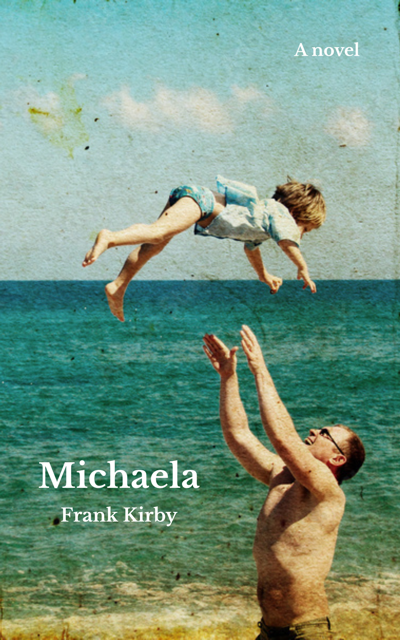
Michaela
“That’s harsh,” Joseph says. “A parent never expects to bury her own child. I think that’s a given.”
Molly gets up and walks to the window… “I don’t remember her -”
“Of course not. You were a baby,” Anne says.
What happens when a family’s grief is buried along with the death of a child? Kirby’s novel explores the delicate dynamics of a family faced with such a loss.
In 1953, when four-year-old Michaela dies of bulbar poliomyelitis, her mother, Maureen Murphy, compulsively controls the family’s grief. In doing so, she effectively locks the loss within the hearts and souls of her children. The surviving children find church, family and one another inadequate for coming to terms with the tragedy. Joseph a Vincentian Priest, struggles to find intimacy in his life; Anne sets out for the convent at seventeen years of age, then succumbs to depression and anxiety; Molly, the youngest sibling (an infant when Michaela dies), never finds her place among her friends, within her own family, or ultimately in her marriage as she attempts to understand the effect of Michaela’s death on her own life.
Along the way, we travel across seven decades and countless vibrant settings: the streets of long-ago New York City; California's rugged Pacific coast; the Castro, and Haight Ashbury; the Pacific Northwest; the rainswept landscape of Ireland’s west coast; life in the middle-class blocks of Queens and New Jersey.
Through character studies of these siblings, Kirby weaves a compelling and beautifully articulated portrait of what it was like to grow up Irish Catholic in the latter half of the 20th century in America, and how the death of Michaela shapes their lives throughout the years.